
رؤى الصناعة
2026-09-14 18:02:09

تحديث التسجيل بسبب التنقل في 5GC: أسباب البدء وتدفق الإشارات

يعالج تحديث التسجيل بسبب التنقل في 5GC تغييرات منطقة التسجيل ومسارات AMF نفسه أو الانتقال بين وحدات AMF ونقل السياق وخطوات الأمان والاشتراك المشروطة، والمعلمات المعادة في Registration Accept.

بيك تيلكوم

تحديث التسجيل بسبب التنقل في 5GC: أسباب البدء وتدفق الإشارات

يحافظ تحديث التسجيل بسبب التنقل على سياق التنقل لجهاز UE مسجَّل بالفعل عند تغير موقعه أو معلومات التسجيل المتفَق عليها. وهو يوازن بين قابلية الوصول وحمل الإشارات: فلا يعيد UE المسجَّل التسجيل الأولي بعد كل تغيير للخلية. ويتبع التنقل العادي عبر نفاذ 3GPP داخل 5GS المسارات أدناه؛ أما التشغيل البيني مع EPS وحالات النفاذ الخاصة فتحتاج إلى إجراءات إضافية.

حدّد سبب البدء ومنطقة التسجيل

تُعرَّف منطقة التتبع (TA) بواسطة TAI. ومنطقة التسجيل هي مجموعة مناطق TA التي تخصصها الشبكة، ويمكن لـUE التحرك داخلها دون تحديث التسجيل لمجرد تغير TA. فإذا تضمنت القائمة المخصصة TA1 وTA2، فلا يتطلب الانتقال بينهما بحد ذاته تحديثاً. ويُعد دخول TA3 خارج تلك القائمة سبباً نموذجياً لبدء تحديث التنقل، حتى إذا كان AMF نفسه يخدم مناطق TA الثلاث جميعها.

ليست مغادرة منطقة التسجيل السبب الوحيد للبدء. فقد تتطلب أيضاً تغييرات القدرات أو معلمات البروتوكول المتفَق عليها وبعض إشارات الشبكة تحديث التسجيل بسبب التنقل دون تغيير TA. افحص السبب الفعلي ونوع التسجيل 5GS في Registration Request. ويُعد تحديث التسجيل الدوري الناتج عن المؤقت حالة منفصلة.
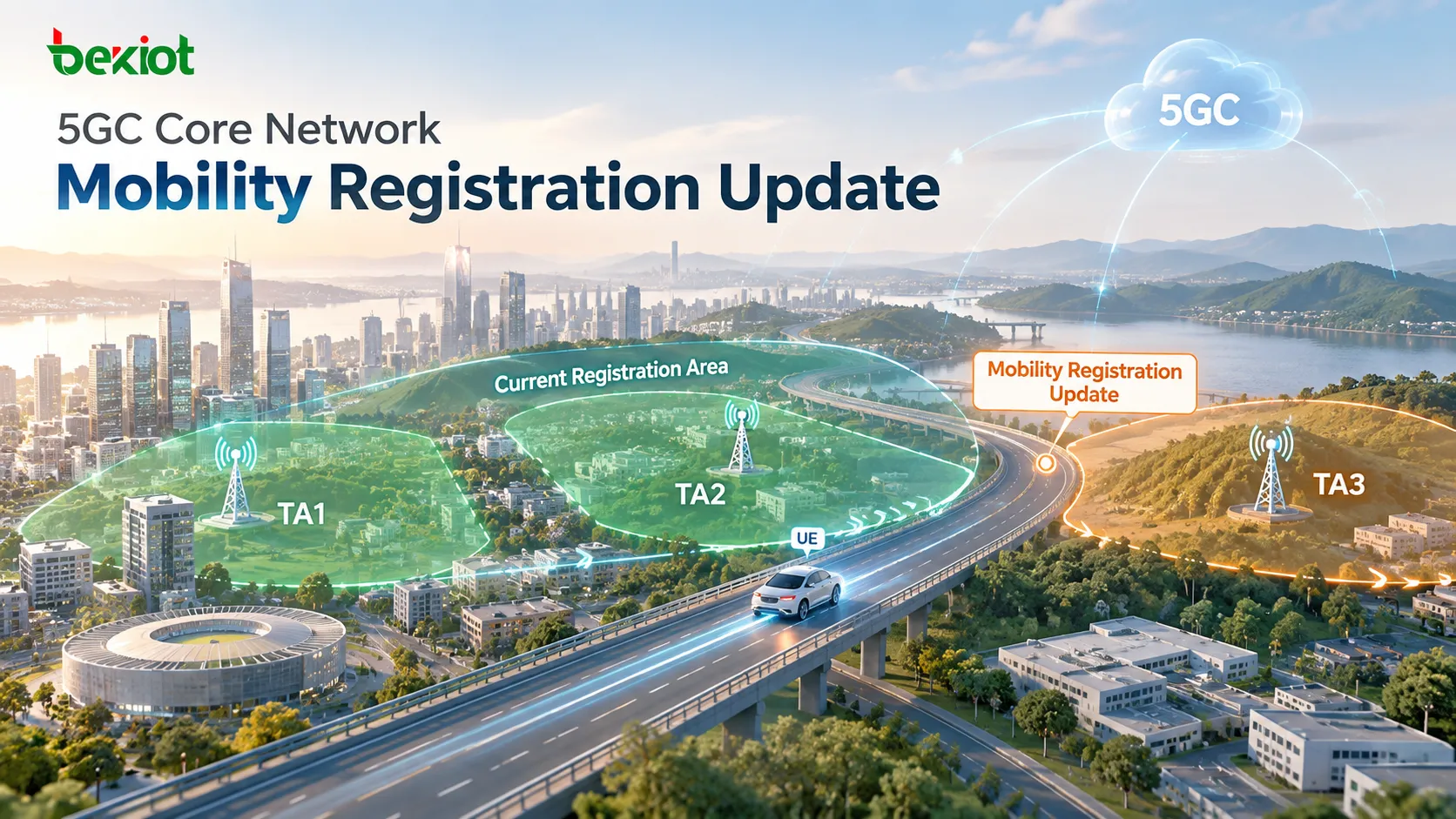
مشهد طريق مفاهيمي يبين UE يغادر منطقة تسجيل تضم TA1 وTA2 باتجاه TA3
عند نقل العميل من منطقة التسجيل الحالية إلى عميل جديد خارج هذه المنطقة، يتم تفعيل تحديث تسجيل المرونة؛ ولا يتطلب التحويل العادي بين الشبكات أو تغيير العميل داخل منطقة التسجيل إعادة التسجيل.

اقرأ Registration Request ضمن سياق النفاذ

يحتفظ UE عادةً بمعرّف 5G-GUTI ومعلمات التسجيل وسياق أمان NAS. وتحدد Registration Request التحديث من خلال نوع التسجيل 5GS. وقد تحمل، وفق الشروط المنطبقة، معرّف 5G-GUTI القائم وLast Visited Registered TAI وUE Security Capability وPDU Session Status وRequested NSSAI. ولا تشكل عناصر المعلومات هذه قائمة إلزامية غير مشروطة لكل طلب.

عندما ينشئ UE سياق إشارات RAN جديداً، تمرر gNB طلب NAS ضمن NGAP Initial UE Message مع معلومات موقع النفاذ مثل TAI وNR-CGI. وإذا كان اتصال إشارات مناسب مرتبط بـUE موجوداً بالفعل، يتبع نقل NAS ذلك الاتصال القائم. لذلك لا تكون Initial UE Message إلزامية في كل تحديث تنقل.

افصل المعالجة لدى AMF نفسه عن المعالجة بين وحدات AMF

الحالةمعالجة السياق
AMF الخادم نفسهيستخدم AMF سياق UE القائم لديه، ويعالج المعلومات الجديدة، ويحدد منطقة التسجيل المنطبقة. ولا يلزم نقل السياق بين وحدات AMF لمجرد تغير قائمة TA.
AMF خادم جديديحدد AMF الجديد وحدة AMF القديمة باستخدام الهوية المؤقتة القائمة ومعلومات الاختيار المنطبقة، ثم يحاول استرجاع السياق عند اللزوم. ولا يقوم اختيار AMF على ربط ثابت واحد إلى واحد مع كل TA.

في حالة الانتقال بين وحدات AMF، تسترجع Namf_Communication_UEContextTransfer سياق الهوية والتنقل والأمان المتاح من AMF القديم. وقد تتضمن المعلومات المنقولة SUPI وGPSI وPEI حيثما تتوافر، إلى جانب سياق النفاذ والتنقل. وقد يتطلب تعذر العثور على السياق القديم أو التحقق من صلاحيته إجراءات للهوية والأمان، بدلاً من جعل UE غير قابل للتعرّف عليه بصورة دائمة.

لا تضمن إعادة استخدام السياق تجاوز المصادقة. فتُنفَّذ Identity Request/Identity Response والمصادقة، مثل 5G-AKA، عندما تتطلبها المواصفة وشروط الأمان. كما أن النقل الناجح لا يجعل كل إجراء للهوية أو الأمان إلزامياً. افحص صلاحية السياق وفحوص السلامة قبل تفسير تتبّع أقصر على أنه غير مكتمل.
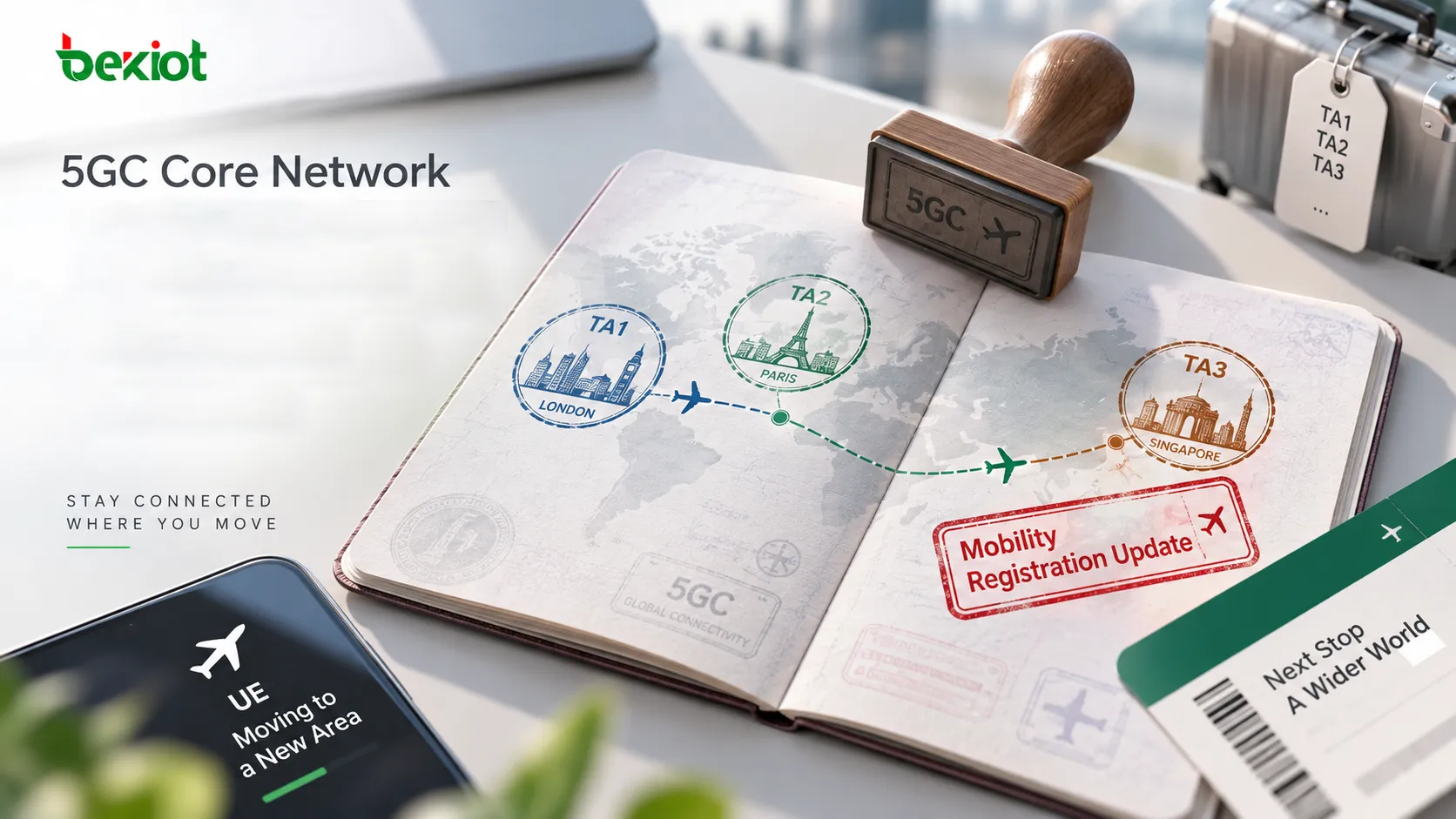
صورة مفاهيمية لجواز سفر يحمل أختام TA1 وTA2 وTA3 وتسمية تحديث التنقل
يتم استخدام إجراءات مختلفة في تحديث تسجيل المرونة لشبكات 5G-C عند تغير منطقة التسجيل داخل نفس AMF وعند الانتقال عبر AMFs المختلفة. وفي سيناريوهات الانتقال عبر AMFs، يحتاج AMF الجديد إلى استرداد سياق UE من AMF القديم.

افهم خطوات UDM والاكتشاف والسياسات

عندما يجب تغيير تسجيل AMF الخادم، يستخدم AMF الجديد خدمة Nudm_UECM_Registration لتحديث علاقة الخدمة لدى UDM للنفاذ المعني. ووفق الشروط المحددة، يُخطر UDM وحدة AMF القديمة عبر Nudm_UECM_DeregistrationNotification. ويمحو ذلك علاقة الخدمة السابقة؛ ولا ينبغي الخلط بينه وبين تبادل عام لإلغاء التسجيل موجَّه إلى UE.

يحصل AMF على بيانات الاشتراك المطلوبة والاشتراكات في إشعارات تغييراتها، أو يعيد استخدامها. وقد تتضمن بيانات النفاذ والتنقل GPSI ومعلومات الشرائح المشترك بها وUE-AMBR المشترك به ومعلمات التسجيل الدوري وقيود RAT وقيود منطقة الخدمة. وقد تتضمن بيانات اختيار SMF المنفصلة معلومات DNN المرتبطة بـS-NSSAI.

يُستخدم الاكتشاف عبر NRF عند الحاجة إلى تحديد مواقع وظائف الشبكة؛ ولا يتطلب كل تحديث معاملة اكتشاف جديدة. وبالمثل، يختار AMF ارتباط سياسة AM لدى PCF أو يحدّثه عند اللزوم بدلاً من إنشاء ارتباط جديد دون شروط. ويمكن اختصار تسجيل UDM واسترجاع بيانات الاشتراك ومعالجة السياسات عند الاحتفاظ بحالة صالحة.

تساعد PDU Session Status على التوفيق بين حالات الجلسات. وقد تتطلب الجلسات القائمة تحديثات لسياق SMF أو تنشيط مستوى المستخدم، وفق الطلب وحالة التنقل. ولا ينشئ قبول التسجيل وحده جلسة PDU جديدة ولا يثبت استئناف خدمة مستوى المستخدم.

فسّر Registration Accept والإكمال على نحو صحيح

توفر Registration Accept نتيجة التسجيل والمعلمات المنطبقة مثل قائمة TAI وAllowed NSSAI وT3512. ولا تفترض وجود كل عنصر معلومات اختياري في كل استجابة. وفي تحديث التسجيل الناجح بسبب التنقل، يُخصَّص 5G-GUTI جديد وفق TS 24.501؛ ويمكن توفيره من خلال إجراء التسجيل أو إجراء تحديث إعداد UE العام المنطبق.

يرسل UE رسالة Registration Complete عندما يكون التأكيد مطلوباً، ولا سيما عندما تتضمن Registration Accept معرّف 5G-GUTI جديداً. ويجب تفسير وجودها بالرجوع إلى عناصر المعلومات المتلقاة. ويمكن أن يستخدم AMF إجراء NGAP Initial Context Setup عند إنشاء سياق RAN المطلوب؛ وتُطبَّق إجراءات أخرى للسياق ونقل NAS عندما يكون ذلك السياق موجوداً بالفعل. ولا ترتبط Registration Accept دائماً بتبادل Initial Context Setup جديد.

صورة مفاهيمية لمسافر في مطار ينظر إلى كرة أرضية متصلة
يقوم AMF الجديد بإرسال 5G-GUTI الجديد، والـ NSSAI المسموح به، وT3512، ونطاق التسجيل من خلال رسالة قبول التسجيل، ثم يعود العميل إلى حالة "تم التسجيل بالكامل".

اتبع قائمة فحص عملية للتتبّع

  • تحقق من سبب البدء وقائمة TAI المخزَّنة وTAI الحالي ونوع التسجيل قبل فحص الرسائل اللاحقة.

  • حدّد AMF الخادم وما إذا كان نقل السياق مطلوباً فعلاً. وعند إخفاق الاسترجاع، افحص 5G-GUTI/GUAMI وعنونة AMF ونتائج التحقق من السلامة.

  • إذا توقفت المعالجة في الشبكة الأساسية، فافحص تسجيل UDM المطلوب والوصول إلى بيانات الاشتراك ونتائج السياسات وقيود المنطقة؛ فغياب معاملة اختيارية لا يثبت الإخفاق.

  • إذا لم يصل القبول إلى UE، فاربط سجلات NAS وNGAP وسياق RAN والنقل. ثم افحص أي إكمال مطلوب واستعادة الجلسات كلّاً على حدة.

الأسئلة الشائعة

هل يؤدي تغيير الخلية دائماً إلى تحديث التنقل؟

لا. فتغيير الخلية أو TA داخل منطقة التسجيل المخصصة وحده لا يتطلب ذلك. وقد تظل شروط أخرى محددة لتحديث التسجيل منطبقة.

هل تؤدي مغادرة منطقة التسجيل دائماً إلى تغيير AMF؟

لا. فقد يخدم AMF نفسه منطقة TA الجديدة ويحدّث منطقة تسجيل UE باستخدام سياقه القائم.

كيف يختلف تحديث التسجيل الدوري؟

سبب بدئه هو سلوك المؤقت الدوري المنطبق، وليس بالضرورة الحركة. ويستخدم كلا الإجرائين Registration Request، لذا افحص نوع التسجيل بدلاً من الاعتماد على اسم الرسالة.

هل الانتقال من 4G إلى 5G هو الإجراء نفسه؟

قد يستخدم نوع التسجيل نفسه، لكن سياق المصدر يختلف. ويمكن أن يتضمن التشغيل البيني من EPS إلى 5GS سياق MME والهويات المحوَّلة وN26 حيثما يكون مدعوماً. فلا تطبق تدفق AMF القديم داخل 5GS على كل حالة تشغيل بيني مع EPS.

مراجع تقنية

لإطار التسجيل وخطوات الشبكة الأساسية المشروطة، راجع 3GPP TS 23.502، الإصدار 18، وخصوصاً البند 4.2.2.2.

لأسباب بدء NAS والهويات المؤقتة وشروط الإكمال، راجع 3GPP TS 24.501، الإصدار 18، وخصوصاً البندين 5.4.4 و5.5.1.3.

للحالة المنفصلة الناتجة عن المؤقت، اقرأ تحديث التسجيل الدوري.
المنتجات الموصى بها
كتالوج
خدمة العملاء الهاتف
We use cookie to improve your online experience. By continuing to browse this website, you agree to our use of cookie.

Cookies

This Cookie Policy explains how we use cookies and similar technologies when you access or use our website and related services. Please read this Policy together with our Terms and Conditions and Privacy Policy so that you understand how we collect, use, and protect information.

By continuing to access or use our Services, you acknowledge that cookies and similar technologies may be used as described in this Policy, subject to applicable law and your available choices.

Updates to This Cookie Policy

We may revise this Cookie Policy from time to time to reflect changes in legal requirements, technology, or our business practices. When we make updates, the revised version will be posted on this page and will become effective from the date of publication unless otherwise required by law.

Where required, we will provide additional notice or request your consent before applying material changes that affect your rights or choices.

What Are Cookies?

Cookies are small text files placed on your device when you visit a website or interact with certain online content. They help websites recognize your browser or device, remember your preferences, support essential functionality, and improve the overall user experience.

In this Cookie Policy, the term “cookies” also includes similar technologies such as pixels, tags, web beacons, and other tracking tools that perform comparable functions.

Why We Use Cookies

We use cookies to help our website function properly, remember user preferences, enhance website performance, understand how visitors interact with our pages, and support security, analytics, and marketing activities where permitted by law.

We use cookies to keep our website functional, secure, efficient, and more relevant to your browsing experience.

Categories of Cookies We Use

Strictly Necessary Cookies

These cookies are essential for the operation of the website and cannot be disabled in our systems where they are required to provide the service you request. They are typically set in response to actions such as setting privacy preferences, signing in, or submitting forms.

Without these cookies, certain parts of the website may not function correctly.

Functional Cookies

Functional cookies enable enhanced features and personalization, such as remembering your preferences, language settings, or previously selected options. These cookies may be set by us or by third-party providers whose services are integrated into our website.

If you disable these cookies, some services or features may not work as intended.

Performance and Analytics Cookies

These cookies help us understand how visitors use our website by collecting information such as traffic sources, page visits, navigation behavior, and general interaction patterns. In many cases, this information is aggregated and does not directly identify individual users.

We use this information to improve website performance, usability, and content relevance.

Targeting and Advertising Cookies

These cookies may be placed by our advertising or marketing partners to help deliver more relevant ads and measure the effectiveness of campaigns. They may use information about your browsing activity across different websites and services to build a profile of your interests.

These cookies generally do not store directly identifying personal information, but they may identify your browser or device.

First-Party and Third-Party Cookies

Some cookies are set directly by our website and are referred to as first-party cookies. Other cookies are set by third-party services, such as analytics providers, embedded content providers, or advertising partners, and are referred to as third-party cookies.

Third-party providers may use their own cookies in accordance with their own privacy and cookie policies.

Information Collected Through Cookies

Depending on the type of cookie used, the information collected may include browser type, device type, IP address, referring website, pages viewed, time spent on pages, clickstream behavior, and general usage patterns.

This information helps us maintain the website, improve performance, enhance security, and provide a better user experience.

Your Cookie Choices

You can control or disable cookies through your browser settings and, where available, through our cookie consent or preference management tools. Depending on your location, you may also have the right to accept or reject certain categories of cookies, especially those used for analytics, personalization, or advertising purposes.

Please note that blocking or deleting certain cookies may affect the availability, functionality, or performance of some parts of the website.

Restricting cookies may limit certain features and reduce the quality of your experience on the website.

Cookies in Mobile Applications

Where our mobile applications use cookie-like technologies, they are generally limited to those required for core functionality, security, and service delivery. Disabling these essential technologies may affect the normal operation of the application.

We do not use essential mobile application cookies to store unnecessary personal information.

How to Manage Cookies

Most web browsers allow you to manage cookies through browser settings. You can usually choose to block, delete, or receive alerts before cookies are stored. Because browser controls vary, please refer to your browser provider’s support documentation for details on how to manage cookie settings.

Contact Us

If you have any questions about this Cookie Policy or our use of cookies and similar technologies, please contact us at support@becke.cc .