
رؤى الصناعة
2026-09-16 18:06:18

إجراء إلغاء التسجيل بمبادرة UE في 5GC

يشمل إلغاء التسجيل بمبادرة UE في 5GC نطاق الطلب، والتنظيف المشروط لدى SMF/UPF وللسياسات، والفرق بين Normal de-registration وSwitch off، والمؤقت T3521 وفحوص الإشارات للسياق المحرَّر أو المحتفَظ به.

بيك تيلكوم

إجراء إلغاء التسجيل بمبادرة UE في 5GC

لا تثبت رسالة RRC Release أن UE ألغى تسجيله. إذ يمكن لجهاز UE مسجَّل تحرير اتصال إشارات النفاذ مع احتفاظ AMF بسياق التسجيل واحتفاظ SMF بجلسات PDU. أما إلغاء التسجيل بمبادرة UE فيبدأ برسالة NAS من نوع Deregistration Request وينهي التسجيل للنفاذ المحدَّد.

عند تحليل التتبّع، اتبع نطاق الطلب، والتنظيف المطلوب للجلسات والسياسات، واستجابة NAS المتوقعة. يحتفظ كل من AMF وSMF وUPF وPCF وUDM بأجزاء مختلفة من هذه الحالة؛ ولا تحذف جميعها كل سجلّات UE في اللحظة نفسها.

اقرأ نطاق إلغاء التسجيل أولاً

يرسل UE رسالة Deregistration Request إلى AMF مستخدماً معرّفه 5G-GUTI. افحص Deregistration type، بما في ذلك إشارة Switch off، وAccess Type. قد يكون الهدف نفاذ 3GPP أو نفاذاً غير تابع لـ3GPP أو كليهما عندما يخدم AMF نفسه نوعَي النفاذ. وليس بالضرورة أن يكون النفاذ الذي يحمل الطلب هو النفاذ المراد إزالته.

على مستوى ترميز NAS، يُعد نوع النفاذ جزءاً من عنصر معلومات نوع إلغاء التسجيل، وليس حقلاً منفصلاً يحمل معرّف IEI التوضيحي الظاهر أدناه. يجب التحقق من الهوية وحماية السلامة بالرجوع إلى سياق NAS الفعلي؛ فقد يتطلب الطلب غير المحمي أو الذي يتعذر التحقق منه معالجة أمنية قبل التنظيف.
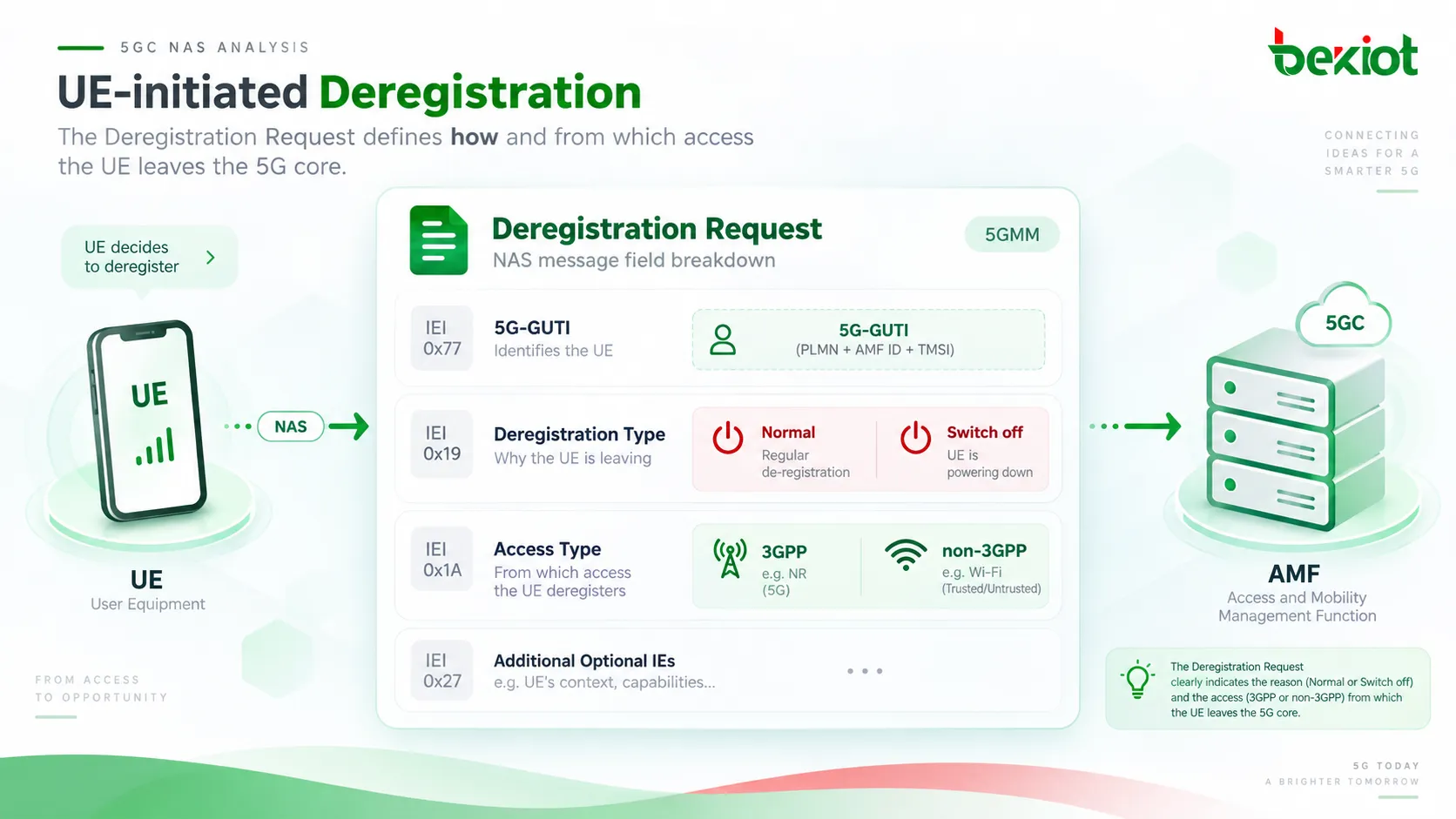
رسم توضيحي لجهاز UE يرسل Deregistration Request إلى AMF، مع إبراز الهوية ونوع إلغاء التسجيل ونطاق النفاذ.
رسم توضيحي لجهاز UE يرسل Deregistration Request إلى AMF، مع إبراز الهوية ونوع إلغاء التسجيل ونطاق النفاذ

حرّر جلسات PDU التابعة للنفاذ المستهدَف

إذا لم توجد جلسة PDU عبر النفاذ المستهدَف، تُتجاوز خطوات تحرير الجلسات. وإلا، يرسل AMF طلب Nsmf_PDUSession_ReleaseSMContext إلى SMF المعني لكل جلسة متأثرة. يؤدي إجراء PDU Session Release المستقل إلى إزالة جلسة بيانات مع إمكانية بقاء التسجيل صالحاً؛ أما إلغاء التسجيل فنطاقه أوسع. وبالنسبة إلى جلسة PDU متعددة النفاذ (MA) ذات موارد لمستوى المستخدم عبر نوعَي النفاذ، فإن إلغاء التسجيل من أحدهما يحرر فقط موارد مستوى المستخدم الخاصة بذلك النفاذ؛ ويمكن أن تبقى الجلسة عبر النفاذ الآخر.

يحرر SMF موارد الجلسة المخصصة، مثل عنوان IP أو البادئة، ويطلب تحرير جلسة N4 من وحدات UPF المعنية. وعلى N4، تحدد رسالتا PFCP Session Deletion Request وPFCP Session Deletion Response تبادل الحذف. يؤدي الحذف الناجح إلى إزالة جلسة PFCP هذه والقواعد المرتبطة بها، بما فيها قواعد PDR وFAR وQER وURR المنطبقة، وتحرير موارد الأنفاق المرتبطة بها.

يعيد SMF استجابة تحرير سياق SM. وفي التجوال الموجَّه عبر الشبكة المنزلية، ينطبق أيضاً التنسيق بين V-SMF وH-SMF. ويتضمن التدفق المرجعي ترتيباً مشروطاً: عندما يلزم الإبلاغ عن استخدام RAT ثانوي، ينفذ AMF أولاً قبول NAS وتحرير النفاذ، ويحصل على بيانات الاستخدام، ثم يتابع تنظيف الجلسات والسياسات.
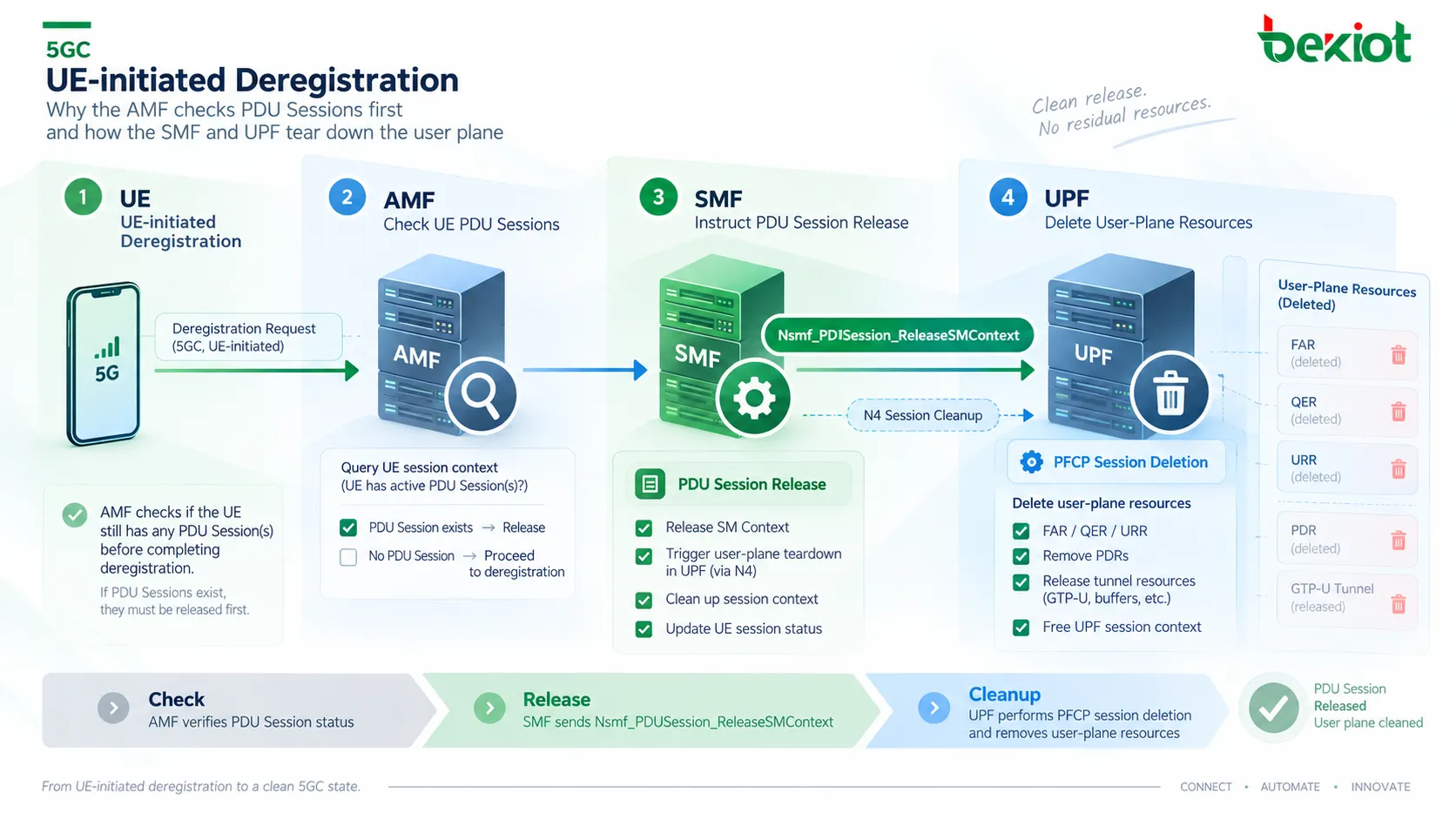
رسم يوضح أدوار UE وAMF وSMF وUPF في إلغاء التسجيل وتحرير موارد مستوى المستخدم.
رسم يوضح أدوار UE وAMF وSMF وUPF في إلغاء التسجيل وتحرير موارد مستوى المستخدم

أزل ارتباطات السياسات وUDM القديمة وفق الشروط

إذا كان PCC الديناميكي منطبقاً، ينهي SMF ارتباط سياسة SM، باستخدام Npcf_SMPolicyControl_Delete حسب الاقتضاء. وبالنسبة إلى آخر جلسة PDU يديرها SMF لجهاز UE ولـDNN وS-NSSAI المرتبطين بها، يستخدم Nudm_SDM_Unsubscribe وNudm_UECM_Deregistration لإزالة الاشتراك المعني وارتباط تسجيل SMF في UDM.

ينهي AMF ارتباطات سياسة AM وسياسة UE القائمة عندما لا يعود UE مسجَّلاً عبر أي نفاذ. ولا تستنتج ضرورة مسح ملف المشترك أو بيانات احتساب الرسوم السابقة أو كل سجل في UDM. فقد يظل نفاذ آخر مسجَّل أو جلسة أخرى بحاجة إلى السياق؛ لذا تحقق من الارتباط المحدد ونطاقه.
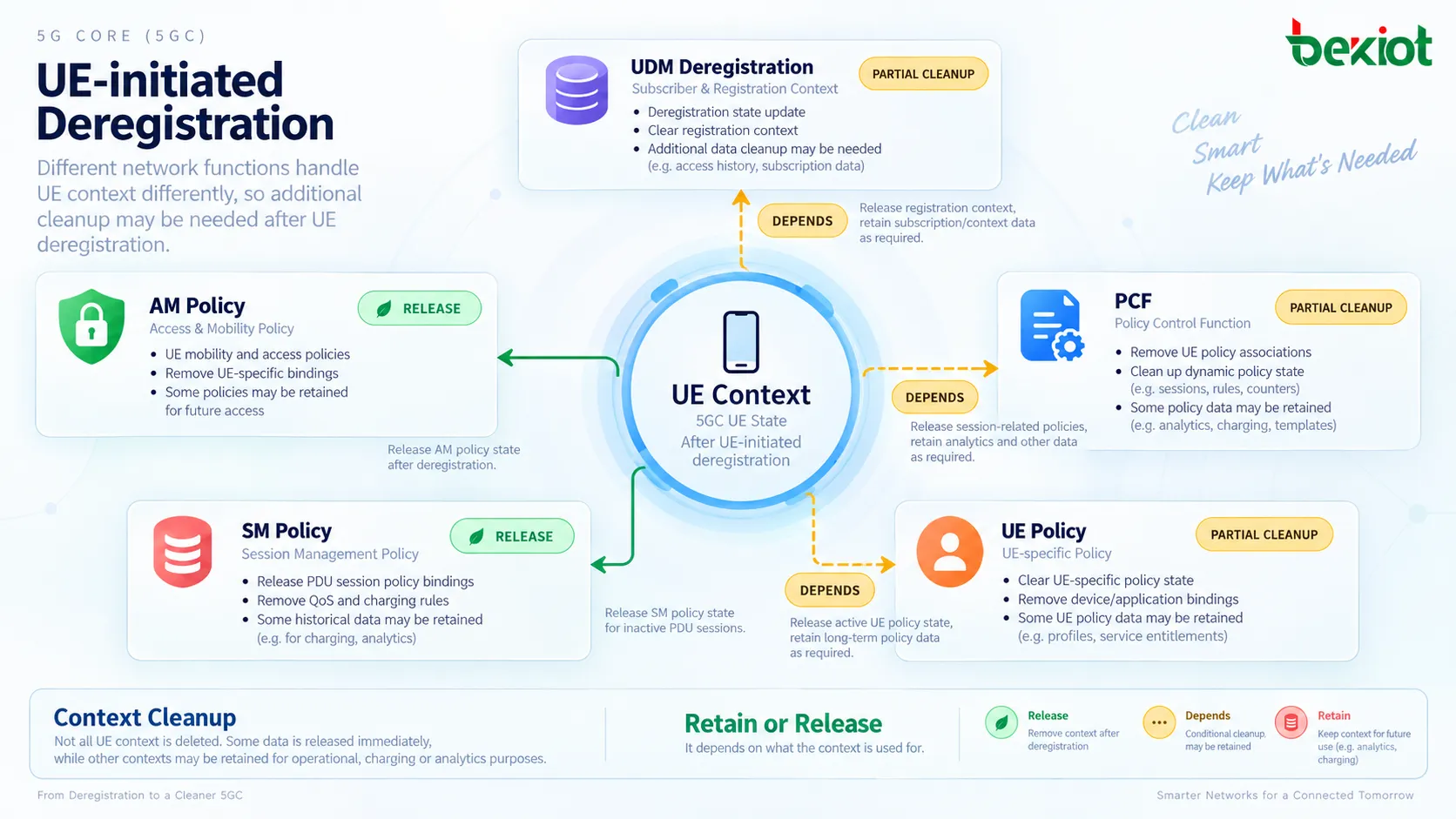
مخطط يجمع تنظيف سياسة AM وسياسة SM وسياسة UE وPCF وUDM حول سياق UE.
مخطط يجمع تنظيف سياسة AM وسياسة SM وسياسة UE وPCF وUDM حول سياق UE

تختلف نهاية الإلغاء العادي للتسجيل عن إيقاف التشغيل

في حالة Normal de-registration، يتوقع UE رسالة Deregistration Accept ويستخدم T3521 لمراقبة الاستجابة، مع اتباع قواعد إعادة المحاولة والإخفاق المحددة إذا انتهت مدة المؤقت. ويحرر AMF أيضاً اتصال إشارات N2 المعني إن كان موجوداً، سواء مع NG-RAN أو بوابة النفاذ غير التابع لـ3GPP المنطبقة.

في حالة Switch off، لا يرسل AMF رسالة Deregistration Accept. ولا ينتظر UE هذا التأكيد قبل إيقاف التشغيل. لذا فإن غياب الاستجابة في هذه الحالة سلوك متوقَّع، ولا يمثل بحد ذاته دليلاً على إخفاق إلغاء التسجيل.

قد لا يصل الطلب إلى AMF مطلقاً بعد فقدان مفاجئ للطاقة أو التغطية. وتُعالَج هذه الحالة غير الطبيعية من الاختفاء من خلال مراقبة قابلية الوصول في الشبكة، ثم إلغاء التسجيل الضمني عند تحقق شروطه. وهي تختلف عن طلب إيقاف تشغيل تم استلامه بنجاح.

قائمة فحص عملية للتتبّع

  1. تحقق من الاتجاه من UE إلى AMF، ومعرّف 5G-GUTI، ونتيجة التحقق من السلامة، ونوع إلغاء التسجيل، والنفاذ المستهدَف.

  2. حدّد ما إذا كانت جلسات PDU وسياقات N4 المتأثرة موجودة قبل البحث عن رسائل التحرير.

  3. اربط معاملات AMF إلى SMF وSMF إلى UPF ومعاملات السياسات وUDM بحسب هوية UE والجلسة؛ وافحص الاستجابات والحالة المحتفَظ بها.

  4. توقّع قبول NAS فقط في الحالة المنطبقة التي لا تتضمن إيقاف التشغيل، وراعِ تحرير النفاذ والترتيب المشروط للإبلاغ عن الاستخدام.

الأسئلة الشائعة

هل وصول طلب إيقاف التشغيل مضمون؟

لا. قد يمنع الفقدان المفاجئ للطاقة أو التغطية الراديوية وصوله. ولا يثبت غياب الطلب أن AMF أزال حالة التسجيل بالفعل.

هل يتضمن كل إلغاء تسجيل حذفاً عبر PFCP؟

لا. إذا لم توجد جلسة PDU منشأة أو سياق N4 ذوا صلة، فلا يوجد ما يقابلهما لحذفه. افحص حالة الجلسة السابقة قبل تصنيف غياب رسائل PFCP على أنه عطل.

هل يمكن أن يظل نفاذ آخر مسجَّلاً؟

نعم. يمكن أن يستهدف إلغاء التسجيل نفاذاً واحداً. افحص النطاق المحدد قبل توقع إنهاء ارتباط سياسة AM أو سياسة UE أو إزالة حالة جميع الجلسات.

كيف يختلف إلغاء التسجيل بمبادرة الشبكة؟

تنتقل رسالة طلب NAS من AMF إلى UE، أو تغيب في حالة إلغاء التسجيل الضمني. ويختلف كل من سبب البدء والاستجابة المتوقعة، رغم اشتراك الإجرائين في بعض خطوات التنظيف في الأنظمة الخلفية.

إجراءات ومعايير ذات صلة

للاتجاه المعاكس لبدء الإجراء، راجع إلغاء التسجيل بمبادرة الشبكة. ولِفهم قابلية الوصول في حالة الخمول قبل التنظيف الضمني، راجع تحديث التسجيل الدوري.

يتبع الإجراء أعلاه البند 4.2.2.3.2 من 3GPP TS 23.502، وسلوك NAS الوارد في البند 5.5.2.2 وجداول المؤقتات من 3GPP TS 24.501، وحذف PFCP الوارد في البند 6.3.4 من 3GPP TS 29.244. طابِق الإصدار والميزات المدعومة مع الشبكة الجاري تحليلها.
المنتجات الموصى بها
كتالوج
خدمة العملاء الهاتف
We use cookie to improve your online experience. By continuing to browse this website, you agree to our use of cookie.

Cookies

This Cookie Policy explains how we use cookies and similar technologies when you access or use our website and related services. Please read this Policy together with our Terms and Conditions and Privacy Policy so that you understand how we collect, use, and protect information.

By continuing to access or use our Services, you acknowledge that cookies and similar technologies may be used as described in this Policy, subject to applicable law and your available choices.

Updates to This Cookie Policy

We may revise this Cookie Policy from time to time to reflect changes in legal requirements, technology, or our business practices. When we make updates, the revised version will be posted on this page and will become effective from the date of publication unless otherwise required by law.

Where required, we will provide additional notice or request your consent before applying material changes that affect your rights or choices.

What Are Cookies?

Cookies are small text files placed on your device when you visit a website or interact with certain online content. They help websites recognize your browser or device, remember your preferences, support essential functionality, and improve the overall user experience.

In this Cookie Policy, the term “cookies” also includes similar technologies such as pixels, tags, web beacons, and other tracking tools that perform comparable functions.

Why We Use Cookies

We use cookies to help our website function properly, remember user preferences, enhance website performance, understand how visitors interact with our pages, and support security, analytics, and marketing activities where permitted by law.

We use cookies to keep our website functional, secure, efficient, and more relevant to your browsing experience.

Categories of Cookies We Use

Strictly Necessary Cookies

These cookies are essential for the operation of the website and cannot be disabled in our systems where they are required to provide the service you request. They are typically set in response to actions such as setting privacy preferences, signing in, or submitting forms.

Without these cookies, certain parts of the website may not function correctly.

Functional Cookies

Functional cookies enable enhanced features and personalization, such as remembering your preferences, language settings, or previously selected options. These cookies may be set by us or by third-party providers whose services are integrated into our website.

If you disable these cookies, some services or features may not work as intended.

Performance and Analytics Cookies

These cookies help us understand how visitors use our website by collecting information such as traffic sources, page visits, navigation behavior, and general interaction patterns. In many cases, this information is aggregated and does not directly identify individual users.

We use this information to improve website performance, usability, and content relevance.

Targeting and Advertising Cookies

These cookies may be placed by our advertising or marketing partners to help deliver more relevant ads and measure the effectiveness of campaigns. They may use information about your browsing activity across different websites and services to build a profile of your interests.

These cookies generally do not store directly identifying personal information, but they may identify your browser or device.

First-Party and Third-Party Cookies

Some cookies are set directly by our website and are referred to as first-party cookies. Other cookies are set by third-party services, such as analytics providers, embedded content providers, or advertising partners, and are referred to as third-party cookies.

Third-party providers may use their own cookies in accordance with their own privacy and cookie policies.

Information Collected Through Cookies

Depending on the type of cookie used, the information collected may include browser type, device type, IP address, referring website, pages viewed, time spent on pages, clickstream behavior, and general usage patterns.

This information helps us maintain the website, improve performance, enhance security, and provide a better user experience.

Your Cookie Choices

You can control or disable cookies through your browser settings and, where available, through our cookie consent or preference management tools. Depending on your location, you may also have the right to accept or reject certain categories of cookies, especially those used for analytics, personalization, or advertising purposes.

Please note that blocking or deleting certain cookies may affect the availability, functionality, or performance of some parts of the website.

Restricting cookies may limit certain features and reduce the quality of your experience on the website.

Cookies in Mobile Applications

Where our mobile applications use cookie-like technologies, they are generally limited to those required for core functionality, security, and service delivery. Disabling these essential technologies may affect the normal operation of the application.

We do not use essential mobile application cookies to store unnecessary personal information.

How to Manage Cookies

Most web browsers allow you to manage cookies through browser settings. You can usually choose to block, delete, or receive alerts before cookies are stored. Because browser controls vary, please refer to your browser provider’s support documentation for details on how to manage cookie settings.

Contact Us

If you have any questions about this Cookie Policy or our use of cookies and similar technologies, please contact us at support@becke.cc .