
رؤى الصناعة
2026-07-27 17:30:46
معلمات ULI في 5GC والإبلاغ عن موقع المستخدم في شبكات نواة 5G
شرح ULI في 5GC من خلال معلومات موقع المستخدم التي يرسلها gNB، وبنية NR ULI، وTAI وNCGI وNCI ومنطقة التسجيل وتشغيل MRU ومسار بيانات الموقع بين AMF وSMF وPCF وNEF ووظائف التطبيقات.

بيك تيلكوم

معلمات ULI في 5GC والإبلاغ عن موقع المستخدم في شبكات نواة 5G

في شبكة نواة 5G، لا تستطيع النواة اكتشاف معلومات موقع المستخدم بنفسها. يأتي الموقع الشبكي اللحظي لجهاز UE من جهة النفاذ الراديوي، ولا سيما من gNB الذي يخدم المستخدم. يعرف gNB الخلية التي يستخدمها UE ومنطقة التتبع التي تنتمي إليها الخلية وكيف ينبغي رفع هذا الموقع الراديوي إلى الشبكة العليا. ولهذا تعد ULI، أي User Location Information، معلمة مهمة في إشارات 5GC.

تُنقل ULI ضمن إشارات NGAP من gNB إلى AMF. وهي تمنح النواة مرجع الموقع اللازم للتسجيل وإدارة التنقل ومعالجة الجلسات والتحكم في السياسات وتوجيه الخدمات وإتاحة المعلومات للتطبيقات. عملياً، لا تمثل ULI تحديد موقع على مستوى الشارع، بل هوية موقع شبكية مبنية من معرفات النفاذ الراديوي مثل TAI وNR CGI. وتسمح هذه المعرفات لنواة 5G بفهم موقع UE على مستوى منطقة التتبع والخلية.
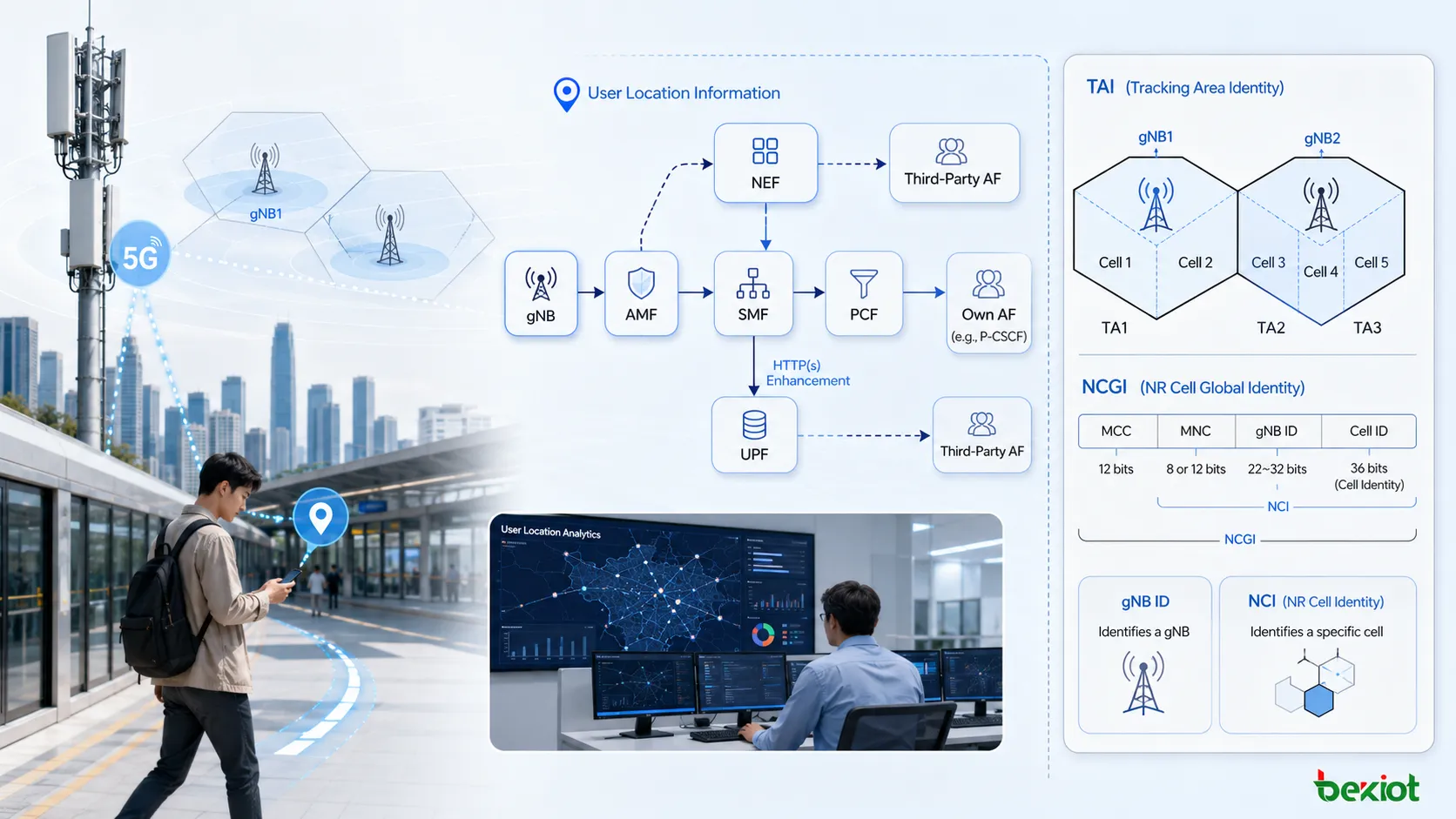
مخطط إبلاغ ULI في 5GC يوضح إرسال gNB لمعلومات User Location Information التي تتضمن TAI وNR CGI إلى AMF عبر إشارات NGAP
تتيح ULI لـgNB الإبلاغ عن موقع UE إلى نواة 5G عبر إشارات NGAP، باستخدام TAI وNR CGI بصورة أساسية في سيناريوهات SA.

كيف تصل ULI إلى النواة

يكون اتجاه إبلاغ ULI من gNB إلى AMF. يضمّن gNB معلمة ULI في عدة رسائل N2 لكي يحصل AMF على الموقع الشبكي الحالي لجهاز UE. وهذا مهم لأن قرارات AMF تعتمد على مكان UE ومنطقة التتبع التي ينتمي إليها وما إذا كانت هناك حاجة إلى تحديث للتنقل أو التسجيل.

يمكن لعدة رسائل NGAP حمل ULI، ومنها PDU Session Resource Release Response وPDU Session Resource Modify Response وPDU Session Resource Notify وUE Context Release Complete وUE Context Modification Response وRRC Inactive Transition Report وHandover Notify وPath Switch Request. وتعد رسالتان مهمتين بصورة خاصة لنقل NAS: Initial UE Message وUplink NAS Transport. وبما أنهما تحملان إشارات 5G NAS، يستطيع AMF الحصول على معلومات موقع UE الآنية أثناء الإجراءات المرتبطة بـNAS.

يبقي هذا التصميم منطق الإبلاغ عن الموقع قريباً من الشبكة الراديوية. يراقب gNB الخلية الخادمة ويرسل المعرفات ذات الصلة عبر NGAP، ثم يستخدم AMF هذه المعلومات ضمن سياق أوسع للتنقل والجلسة.

مكونات NR ULI

تُعرّف ULI بخيارات مختلفة لمعلومات الموقع. وبصورة عامة، يمكن أن تتضمن E-UTRA ULI في السيناريوهات المرتبطة بـNSA، وNR ULI في السيناريوهات المرتبطة بـSA. وفي شبكة 5G مستقلة يكون التركيز الرئيسي على NR ULI.

تتكون NR ULI أساساً من جزأين: 5G TAI وNR CGI، المعروف أيضاً باسم NCGI. يحدد TAI منطقة التتبع، بينما يحدد NCGI خلية NR بعينها على المستوى العالمي. وباجتماعهما تحصل النواة على سياق منطقة التتبع وسياق الخلية الراديوية لجهاز UE.

يتكون TAI من MCC + MNC + TAC. يحدد MCC وMNC شبكة PLMN، بينما يحدد TAC منطقة التتبع. وتتيح هذه البنية للشبكة ربط UE بشبكة المشغل ومنطقة التتبع الصحيحتين. وقد ورثت 5G مفهوم منطقة التتبع من 4G، لكنه ما زال مهماً في إدارة التنقل.

يتكون NCGI من هوية PLMN وNCI. أما NCI، أي NR Cell Identity، فطوله 36 بت ويتضمن gNB ID وCell ID. ولأن طول gNB ID متغير، يعتمد طول Cell ID على عدد البتات المخصصة لـgNB ID. فعلى سبيل المثال، إذا كان طول gNB ID يساوي 24 بت، يتبقى 12 بت لـCell ID. وهذه العلاقة مهمة عند تفسير قيم هوية الخلية أو حساب NCI وNCGI.

العلاقة بين المناطق المختلفة

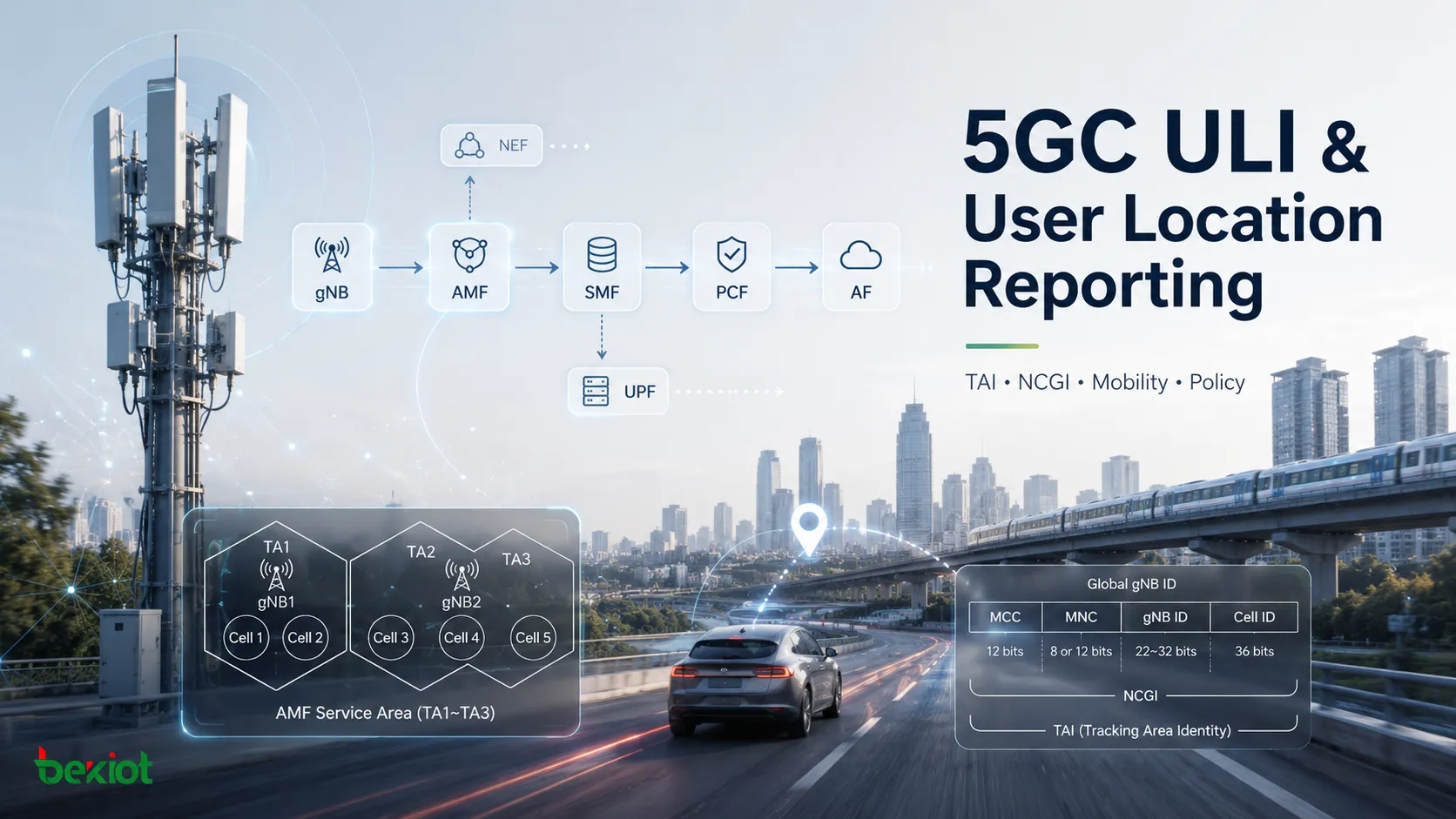
تعد العلاقة بين منطقة التسجيل ومنطقة التتبع وgNB والخلية أساسية لفهم التنقل في 5G. تنتمي كل خلية إلى محطة قاعدية واحدة وإلى منطقة تتبع واحدة فقط. ويمكن أن تحتوي منطقة التتبع على عدة محطات قاعدية وعدة خلايا. كما يمكن، وفق تخطيط الشبكة الراديوية، تعيين خلايا مختلفة ضمن gNB واحد إلى مناطق تتبع مختلفة.

يتكون نطاق خدمة AMF من عدة مناطق تتبع. وداخل هذا النطاق يمكن لـAMF أن يخصص لأجهزة UE المختلفة مناطق تسجيل مختلفة وفق السياسة. وقد تضم منطقة التسجيل منطقة تتبع واحدة أو أكثر. وهذا قريب في المفهوم من TA List المستخدمة في 4G، لكنه يطبق ضمن سياق التنقل في نواة 5G.

تهدف منطقة التسجيل إلى تجنب الإشارات غير الضرورية مع إبقاء UE قابلاً للوصول. إذا تحرك UE داخل منطقة التسجيل المخصصة له، فلا يحتاج إلى تشغيل تحديث تسجيل التنقل مع كل تغيير للخلية. أما إذا خرج من المنطقة المخصصة فعليه بدء إجراء MRU، أي Mobility Registration Update.

يمكن توضيح ذلك بمستخدم يسافر على خط مترو. إذا خصص AMF للمستخدم منطقة تسجيل تتضمن TA1 وانتقل المستخدم من gNB داخل TA1 إلى gNB داخل TA2، يكون قد تجاوز حد التسجيل المخصص. وحتى إذا بقي AMF نفسه، يجب على UE تنفيذ MRU لأن منطقة التسجيل المخصصة قد تغيرت.
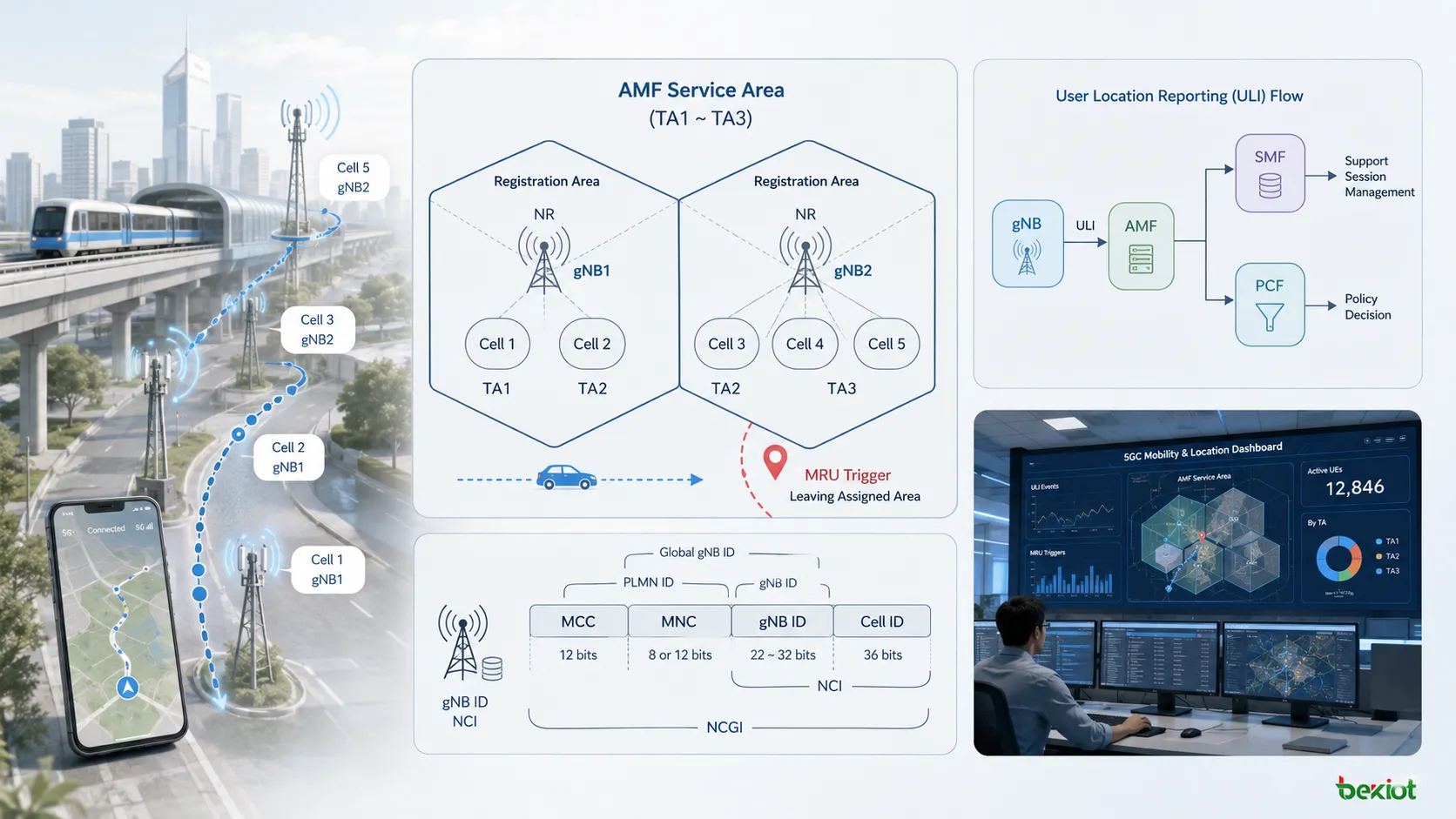
علاقة منطقة التسجيل في 5GC موضحة مع TA وgNB وخلية NR ونطاق خدمة AMF وتشغيل MRU عند خروج UE من المنطقة المخصصة
يربط تخطيط منطقة التسجيل علاقات TA وgNB والخلايا بحيث لا يشغل UE إجراء MRU إلا عند خروجه من منطقة التنقل المخصصة.

إلى أين تنتقل بيانات الموقع

بعد أن يتلقى AMF معلومات ULI من gNB، يمكن لعدة وظائف في نواة 5G استخدام معلومات الموقع. ويكون AMF أول وظيفة في النواة تستقبل الموقع المبلغ عنه. ومنه يمكن مشاركة المعلومات المرتبطة بالموقع مع SMF لإدارة الجلسات، ومع PCF لاتخاذ قرارات السياسة، ومع الوظائف الموجهة للتطبيقات عندما يسمح تصميم الشبكة بذلك.

يمكن فهم مسار إشارات نموذجي بالشكل gNB → AMF → SMF → PCF. وقد يوفر PCF معالجة للسياسات لوظائف التطبيقات التابعة للمشغل، مثل P-CSCF في السيناريوهات المرتبطة بـIMS. ويمكن لمسار آخر إتاحة المعلومات عبر NEF لوظائف تطبيقات تابعة لأطراف خارجية عند تطبيق قواعد الإتاحة وصلاحيات الخدمة.

قد تشارك المعلومات المرتبطة بـULI أيضاً في إتاحة خدمات مرتبطة بمستوى المستخدم. على سبيل المثال، يمكن لـSMF التفاعل مع UPF، وقد يدعم UPF في بعض تصاميم الخدمات إثراء ترويسات HTTP باتجاه تطبيقات خارجية. ولا يعني ذلك أن كل تطبيق يحصل تلقائياً على بيانات الموقع كاملة، بل يعني أن بنية 5G تحدد مسارات يمكن من خلالها لوظائف السياسة والجلسة والتطبيق استخدام معلومات موقع المستخدم من جهة الشبكة.

الخلاصة التقنية الأساسية بسيطة: تبدأ ULI من gNB، وتدخل النواة عبر AMF، ثم يمكن أن تؤثر في منطق التنقل والجلسات والسياسات وإتاحة الخدمات. يوضح TAI موقع منطقة التتبع، ويحدد NCGI هوية خلية NR، بينما يحدد منطق منطقة التسجيل متى يجب على UE الإبلاغ عن تغيرات التنقل عبر MRU.

الأسئلة الشائعة

لماذا لا يستطيع AMF معرفة الموقع الراديوي لجهاز UE مباشرة؟

AMF وظيفة من وظائف الشبكة الأساسية. وهو يعتمد على معلومات NGAP التي يبلغها gNB لأن الخلية الخادمة والموقع الراديوي ترصدهما شبكة النفاذ.

لماذا تعد Initial UE Message وUplink NAS Transport مهمتين؟

تحملان إشارات NAS من جهة UE إلى AMF، ولذلك تساعد ULI الموجودة في هاتين الرسالتين N2 على ربط إجراءات NAS بموقع UE الحالي.

ماذا يحدث إذا تغير طول gNB ID؟

يبقى NCI بطول 36 بت، ولذلك يترك gNB ID الأطول عدداً أقل من البتات لـCell ID، بينما يترك gNB ID الأقصر عدداً أكبر من البتات.

هل يمكن أن ينتمي gNB واحد إلى عدة مناطق تتبع؟

يمكن تعيين خلايا مختلفة ضمن gNB واحد إلى مناطق تتبع مختلفة. وتعد الخلية وحدة التخطيط الأساسية لأن كل خلية تنتمي إلى TA واحدة فقط.

لماذا يعد MRU مهماً في التنقل اليومي؟

يحافظ MRU على دقة منطقة التسجيل عندما يخرج UE من المنطقة المخصصة، مما يتيح للشبكة إبقاء الجهاز قابلاً للوصول دون تحديثات مفرطة داخل المنطقة.

المنتجات الموصى بها
كتالوج
خدمة العملاء الهاتف
We use cookie to improve your online experience. By continuing to browse this website, you agree to our use of cookie.

Cookies

This Cookie Policy explains how we use cookies and similar technologies when you access or use our website and related services. Please read this Policy together with our Terms and Conditions and Privacy Policy so that you understand how we collect, use, and protect information.

By continuing to access or use our Services, you acknowledge that cookies and similar technologies may be used as described in this Policy, subject to applicable law and your available choices.

Updates to This Cookie Policy

We may revise this Cookie Policy from time to time to reflect changes in legal requirements, technology, or our business practices. When we make updates, the revised version will be posted on this page and will become effective from the date of publication unless otherwise required by law.

Where required, we will provide additional notice or request your consent before applying material changes that affect your rights or choices.

What Are Cookies?

Cookies are small text files placed on your device when you visit a website or interact with certain online content. They help websites recognize your browser or device, remember your preferences, support essential functionality, and improve the overall user experience.

In this Cookie Policy, the term “cookies” also includes similar technologies such as pixels, tags, web beacons, and other tracking tools that perform comparable functions.

Why We Use Cookies

We use cookies to help our website function properly, remember user preferences, enhance website performance, understand how visitors interact with our pages, and support security, analytics, and marketing activities where permitted by law.

We use cookies to keep our website functional, secure, efficient, and more relevant to your browsing experience.

Categories of Cookies We Use

Strictly Necessary Cookies

These cookies are essential for the operation of the website and cannot be disabled in our systems where they are required to provide the service you request. They are typically set in response to actions such as setting privacy preferences, signing in, or submitting forms.

Without these cookies, certain parts of the website may not function correctly.

Functional Cookies

Functional cookies enable enhanced features and personalization, such as remembering your preferences, language settings, or previously selected options. These cookies may be set by us or by third-party providers whose services are integrated into our website.

If you disable these cookies, some services or features may not work as intended.

Performance and Analytics Cookies

These cookies help us understand how visitors use our website by collecting information such as traffic sources, page visits, navigation behavior, and general interaction patterns. In many cases, this information is aggregated and does not directly identify individual users.

We use this information to improve website performance, usability, and content relevance.

Targeting and Advertising Cookies

These cookies may be placed by our advertising or marketing partners to help deliver more relevant ads and measure the effectiveness of campaigns. They may use information about your browsing activity across different websites and services to build a profile of your interests.

These cookies generally do not store directly identifying personal information, but they may identify your browser or device.

First-Party and Third-Party Cookies

Some cookies are set directly by our website and are referred to as first-party cookies. Other cookies are set by third-party services, such as analytics providers, embedded content providers, or advertising partners, and are referred to as third-party cookies.

Third-party providers may use their own cookies in accordance with their own privacy and cookie policies.

Information Collected Through Cookies

Depending on the type of cookie used, the information collected may include browser type, device type, IP address, referring website, pages viewed, time spent on pages, clickstream behavior, and general usage patterns.

This information helps us maintain the website, improve performance, enhance security, and provide a better user experience.

Your Cookie Choices

You can control or disable cookies through your browser settings and, where available, through our cookie consent or preference management tools. Depending on your location, you may also have the right to accept or reject certain categories of cookies, especially those used for analytics, personalization, or advertising purposes.

Please note that blocking or deleting certain cookies may affect the availability, functionality, or performance of some parts of the website.

Restricting cookies may limit certain features and reduce the quality of your experience on the website.

Cookies in Mobile Applications

Where our mobile applications use cookie-like technologies, they are generally limited to those required for core functionality, security, and service delivery. Disabling these essential technologies may affect the normal operation of the application.

We do not use essential mobile application cookies to store unnecessary personal information.

How to Manage Cookies

Most web browsers allow you to manage cookies through browser settings. You can usually choose to block, delete, or receive alerts before cookies are stored. Because browser controls vary, please refer to your browser provider’s support documentation for details on how to manage cookie settings.

Contact Us

If you have any questions about this Cookie Policy or our use of cookies and similar technologies, please contact us at support@becke.cc .